

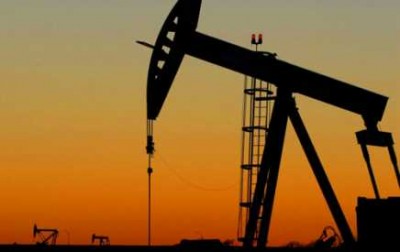
British geologists have discovered a wide array of oil and gas fields in the Falkland Islands. The British oil explorer Desire Petroleum believes that up to 3 billion barrels of oil and gas are currently on the Falkland Islands’ shelf – something that flies in the face of findings by the Edinburgh-based British Geological Survey Agency. Its experts insisted that as much as 60 billion barrels may be recoverable on the shelf. If these estimates prove right that may well rile the world’s oil-rich nations, not least Libya and Nigeria.
The late 1970s saw the breaking news about a spate of lucrative oil and gas fields in the Falkland Islands – deposits that experts insisted were 13 times as much as those in the North Sea at the time. Many believe that the 1982 war between Britain and Argentina with almost 1,000 servicemen killed in the hostilities was all about oil and gas fields in South Atlantic. In this sense, Desire Petroleum should certainly think twice before starting to capitalize on what was a subject of the bloodbath in 1982, analysts warn, citing humanitarian reasons. Some think that drilling in the Falkland Islands is almost certain to cause a wide public outcry.
Remorsefully, business interests continue to prevail over moral values in modern-day world and the recent scandal surrounding the release of the Lockerbie bomber can serve as an example. Libyan al-Megrahi was released from jail on compassion grounds in what analysts hint was engineered by global energy giants BP and Shell, which have repeatedly shown their appetite for the development of fresh deposits. This is also the case with the Falkland Islands, which continue to remain a tit bit for Britain amid a nose-dive in recovery of the North Sea bed-based oil fields. May remarkably saw London indicating eagerness to expand its Falkland Islands’ continental shelf from 200 to 350 nautical miles, which would enable Britain to develop new oil fields in South Georgia and the South Sandwich Islands.
The move is yet to get the nod by the UN, which has already voiced unhappiness over London’s persistent push for claiming its rights for what is still a disputable territory between Britain and Argentina. Given London’s unwillingness to try to arrive at a political accommodation with Buenos Aires, a UN special commission will surely have tougher times ahead as far as its final decision on the continental shelf goes. And it is only to be hoped that Britain will be wise enough not to turn the Falkland Islands into another regional hot spot.
